 Judith Josephson loves to dig into the past and is fascinated by people’s lives. A former teacher, Judith Josephson has written stories, columns, and articles for children. Her award-winning biographies and history books include both nonfiction and fiction for children. Jesse Owens: Legendary Olympian is her most recent title.
In February, we celebrated African Americans. In addition, all eyes were trained on Sochi, Russia, where the Winter Olympics took place. Each day’s sports coverage featured athletes in blazingly colorful athletic outfits. Results of each competition were instantly photographed, tweeted, emailed, and recorded in real time on television. For more than a century, the Olympics, summer and winter, have represented the greatest athletic competition in the world, an event where months and years of training culminate in the best of the best, producing surprises, disappointments, and heroes.
1936 Summer Olympics in Berlin
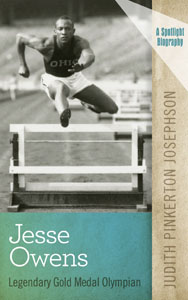 At a very different Olympics seventy-seven years ago, the 1936 summer Olympics in Berlin, Germany, African American track and field star Jesse Owens won four gold medals, surprising the world and infuriating Nazi dictator Adolph Hitler, who called Owens and other African American teammates America’s “black legions.” Hitler’s close associate declared Jesse and his teammates unfit to compete with “human” athletes, akin to allowing a gazelle or a deer on the team.
Today’s Olympics are different in many ways, but similar in others. Olympic athletes have always trained hard to reach this pinnacle of sports. Jesse Owens had grown up in poverty, but had been training for this day since junior high and high school days, when he started breaking records for his age. In college at Ohio State University, at a 1935 meet in Ann Arbor, Michigan, in the space of forty-five minutes, he broke four world records.
Politics isn’t supposed to have a role in the Olympics. But in 1936, the Olympics unfolded against Hitler’s evil intents, racism in the U.S. and the gathering storm of World War II. Since then, issues like the “Cold War,” “Human Rights Violations,” America’s “Civil Rights Movement,” and “South Africa’s apartheid policies” have caused boycotts and affected outcomes.
Fresh-faced young people have always inspired those who watch the Olympics. When Jesse Owens won the gold medal in the 100-meter race, he graciously thanked his Olympic hosts, saying that Berlin was “a beautiful place, a beautiful city. The competition was grand. But I was very glad to come out on top.” Proudly, he wore the winner’s laurel wreath and saluted his flag. Jesse Owens had class. Similarly, earlier this year, American luger Kate Hansen, danced for the crowd and in spite of her 10th place finish, said, “I will be thankful for this moment the rest of my life.”
 Susan L. Lipson, a middle-grade novelist who also happens to be our Forest Beat reporter, shares her recent interview (below) with Althea, a tree fairy with unique knowledge of the human lifestyle. Lipson was tipped off to the fairy’s whereabouts by 10-year-olds Sara and Jonathan, who shared their tale, The Secret in the Wood, with her. The kids accidentally met the displaced tree fairy when Althea regained consciousness after a long sleep on Sara’s wooden bedroom wall. In this interview, Lipson discusses with Althea the positive effects of the burgeoning ebook industry on forest dwellers like herself.
 Gary Paulsen: Adventurer and Author is part of the Spotlight Biography ebook series for young readers. This collection of previously published, well-reviewed biographies will grow over the next two years. Next in line is Judith Josephson’s award-winning biography on Jesse Owens. Download
  Most remarkable is Paulsen’s ability to set different tones. From books like his rollicking Harris and Me, Liar Liar, Flat Broke, Crush, and Lawn Boy, to the phenomenally popular Newbery Honor Book Hatchet, from the searching Canyons to the poetic A Christmas Sonata, Paulsen’s books fly off the shelves.
 Nancy Johnson is a retired school teacher and an active author. She envisioned a trilogy of books for children about the Civil War from different points of view: a Yankee drummer boy, an African-American soldier from Boston, and a VMI cadet and young people from the Shenandoah Valley of Virginia. As she explains on her website: “As a teacher I realized there was a need for historical fiction about the Civil War. I believe many of the issues which divided our country during the Civil War still touch us today.”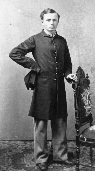
 Mother kept their letters and pictures of the brothers and their little sister, Carrie, in a black box which was decorated with gold hearts and flowers. I was heartbroken when I learned that the youngest brother, George Peacock, had been killed in an ambush in Virginia while he was still a teenager.
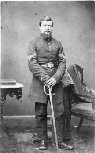 As I passed through one of the back streets of Alexandria I saw a building 3 stories high built of brick with the sign Price Birch & Co Dealer in Slaves. It struck me as something different from anything I had ever seen before.
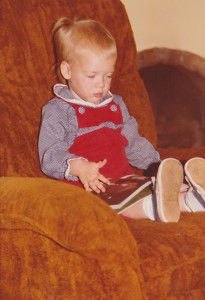 My two adult children love to read—my main claim to success as a mother. They grew up in a home surrounded by books and often opted to spend their birthday money on new volumes of their very own. I remember my daughter as a toddler “reading” with an adult and interrupting if a page were skipped. I knew I was raising another reader when my six-year-old son fell asleep in his bed curled around an open encyclopedia volume.